




QDNY-FW Flywheel Energy Storage SystemEnergy Storage
An advanced physical energy storage, outperforming chemical storage in safety, environmental friendliness, deep-cycle capability, frequency-regulation accuracy, temperature adaptability, cost-effectiveness, zero degradation/maintenance. Aids energy transition, new power systems. Core components: power-control, liquid-cooling, flywheel, braking units.
-
Eliminates air resistance and mechanical friction for low losses, zero degradation, maintenance-free operation. Core components including power-control, liquid-cooling, flywheel, braking units. Ideal for high-power, frequent-cycling, millisecond-response scenarios such as frequency regulation and grid stability.

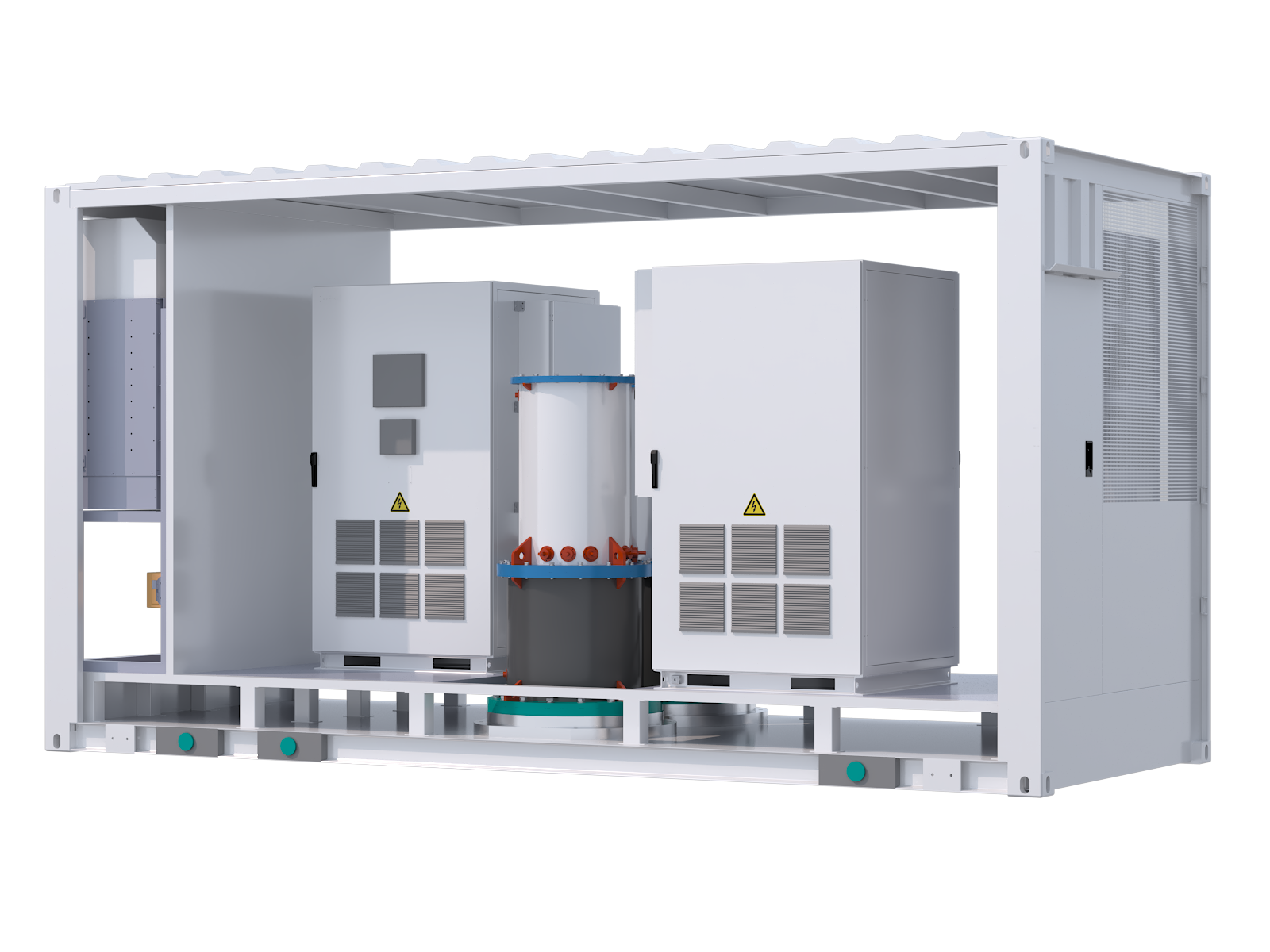
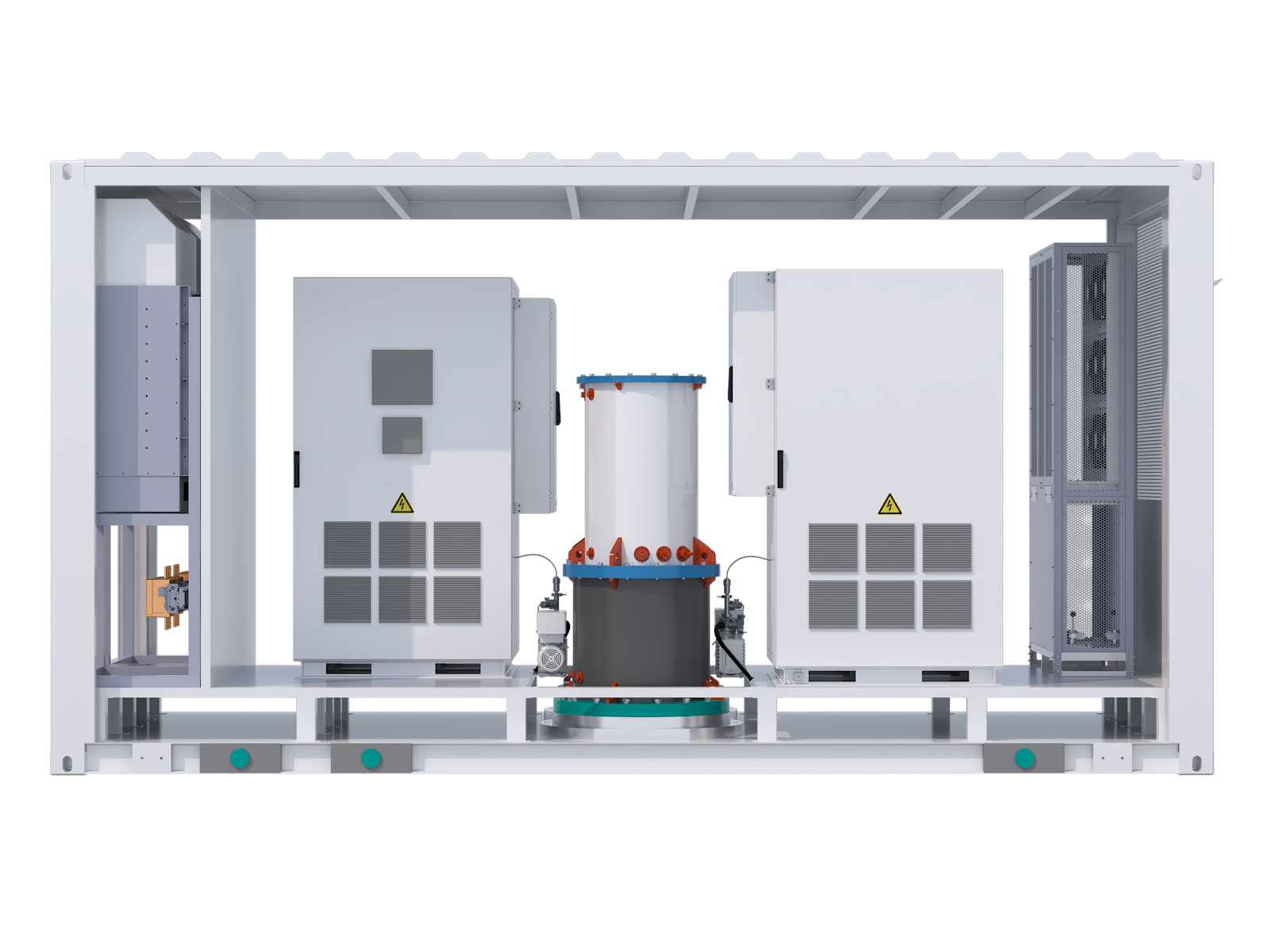
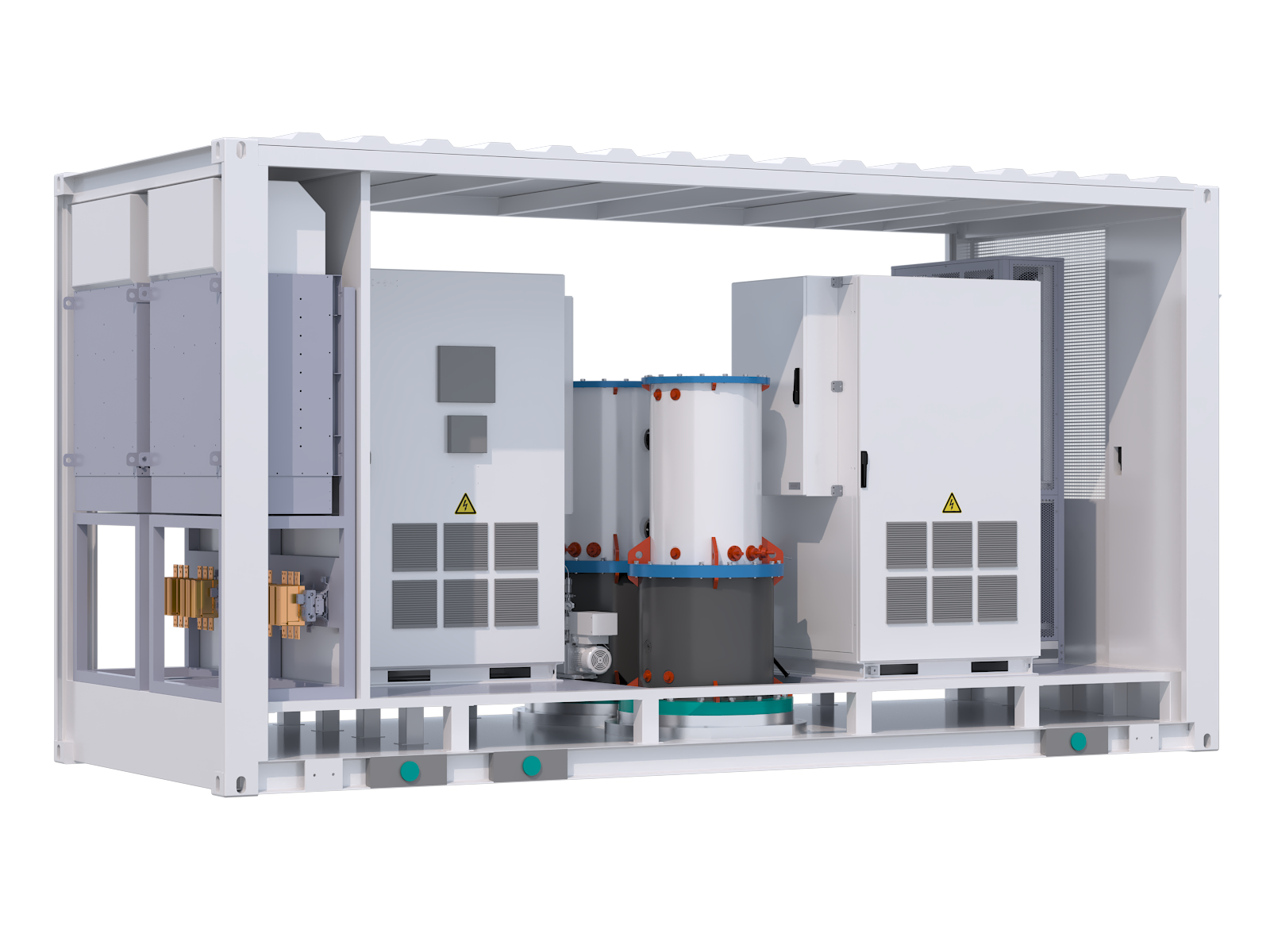
Core Advantages & Features
-

Ultra-high reliability With no fire risk and stable under frequent deep cycling.
01 -
Wide Temp AdaptabilityInsensitive to ambient conditions, wide operating temperature range.
02 -
Long LifespanMillions of cycles with a lifespan exceeding 20 years.
03 -
Low MaintenanceMinimal maintenance due to vacuum and magnetic bearings.
04 -
Millisecond ResponseMillisecond-level response for high-power applications.
05 -
Accurate Energy EstimationHigh-precision speed sensors for accurate energy estimation.
06 -
High EfficiencyFlywheel body efficiency greater than 98%.
07 -
High Residual ValueHigh residual value, flywheel body is recyclable.
08
Technical Parameters
| Basic Parameters | |
|---|---|
| 2 MW / 20 kWh Flywheel Energy Storage System Parameter Table | |
| Flywheel Energy Storage System Parameters | |
| System rated charge/discharge power | 2 MW |
| System (bus) rated voltage | 35 kV |
| Total energy storage capacity when fully charged | 22 kWh |
| Usable energy storage capacity when fully charged | 20 kWh@2MW |
| System operating ambient temperature | -20~+40 ℃ |
| System operating ambient relative humidity | <95% |
| System operating altitude | <2000 m |
| Flywheel Energy Storage Unit Parameters | |
| Flywheel operating rated power | 1 MW |
| Number of flywheel units | 2 |
| Energy storage capacity per flywheel unit | 11 kWh |
| Flywheel's full-charge storage capacity | 10 kWh |
| Flywheel unit rated power speed range | 6500~13000 rpm |
| Flywheel Unit Energy Storage Rotor Material | High-Strength steel |
| Flywheel unit energy storage rotor bearing type | Active magnetic bearing |
| Flywheel unit motor type | Permanent magnet synchronous |
| Flywheel unit motor operating voltage | 690 V (AC) |
| Flywheel unit motor insulation class | Class H |
| Flywheel unit motor efficiency | max98% |
| Motor active braking circuit | Yes, with braking resistor |
| Flywheel unit design service life | 20 years |
| Flywheel unit dimensions | D=950 mm,H=1800 mm |
| Flywheel unit weight | 3.6 tons |
| Flywheel unit installation method | Underground (Pit) |
| Machine-Side converter DC voltage range | 1200~1500 V (DC) |
| Machine-Side converter DC voltage regulation | 1350 V (DC) |
| Machine-Side converter maximum operating frequency | 230 Hz |
| Machine-Side converter efficiency | max.98% |
| Flywheel management system communication interface | RS485, CAN, TCP-IP |
| Flywheel management system human-machine interface | Color touch screen |
| Machine-Side converter + flywheel management system installation | Cabinet installation, integrated into prefabricated container |
| Auxiliary power supply | 380 V (AC),Three-phase four-wire system |
| Cooling method | Air cooling + liquid cooling |
| Protection functions | Output short circuit, output overvoltage, input overcurrent, surge, motor overheating, DSP failure, excessive vacuum, magnetic bearing Instability, flywheel overspeed, etc. |
| Operating noise | <80 dB |
| Charge/discharge response time | <100 ms |


The company consistently maintains robust innovative vitality, standing at the forefront of the industry and driving its advancement. Through cutting-edge technologies and products, it achieves goals of energy conservation, environmental protection, quality enhancement, and consumption reduction, continuously contributing to the development of a resource-efficient and environmentally friendly society.

