


Why Dry-Type Transformers Are Widely Used in Commercial Buildings
2026-03-10
Share

Transformer selection is a critical part of electrical system design in commercial buildings. The type of transformer chosen can influence substation layout, regulatory approvals, operational reliability, and long-term maintenance planning.
As modern buildings become larger and more power-intensive, developers, EPC contractors, and facility owners must consider not only electrical performance, but also the installation environment, safety requirements, and lifecycle operating costs.
Power Distribution in Modern Buildings
Commercial facilities such as office buildings, hospitals, airports, and data centers rely on stable and efficient power distribution systems. Transformers step down medium-voltage electricity from the grid into usable low-voltage power for lighting, HVAC systems, elevators, and IT infrastructure.
Unlike utility substations, transformers in these environments are often installed inside the building, typically in electrical rooms or basement substations. This creates specific design requirements for equipment used in these locations.
Why Dry-Type Transformers Are Often Used Indoors
Because dry-type transformers use solid insulation rather than liquid insulating oil, they eliminate the need for oil containment systems and are generally easier to install in building electrical rooms. This makes them a practical option for projects where space constraints and safety compliance are key design considerations.
Dry-type transformers can also simplify maintenance planning, since there is no insulating oil to monitor or replace during operation.
In addition, when installed indoors, dry-type transformers can often be placed closer to the load center within the building. This helps reduce voltage drop and distribution losses while improving overall power quality.
Daqo SCB Series Dry-Type Transformers
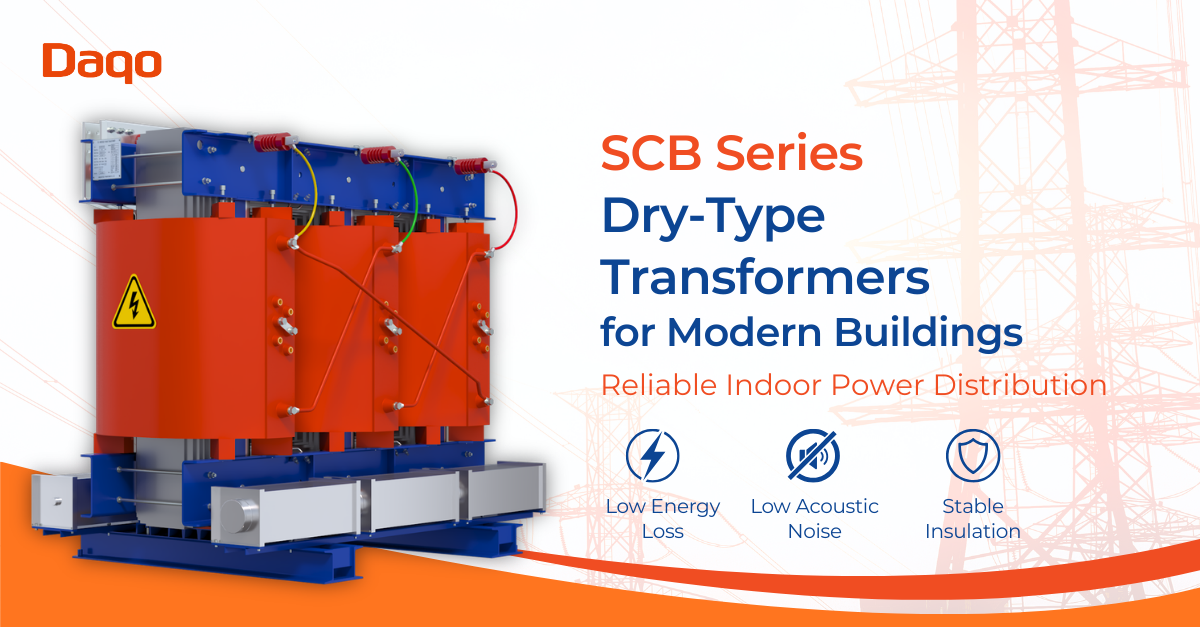
Beyond safety and installation considerations, modern commercial developments are increasingly focused on efficiency and long-term operational performance. Daqo's SCB Series epoxy resin dry-type transformers are designed to meet the needs of modern commercial power distribution systems.
Key features include:
Low-loss design, helping reduce lifecycle energy consumption and operating costs
Low acoustic noise levels, making the transformers suitable for buildings and other noise-sensitive environments
Partial discharge levels below 5 pC, indicating strong insulation integrity and reliable long-term performance
Vacuum resin casting technology, ensuring consistent insulation quality and mechanical strength
Together, these features support stable operation and predictable performance in demanding commercial environments.
Choosing the Right Transformer
Both dry-type and oil-immersed transformers play important roles in modern power systems. The appropriate choice depends on installation location, project requirements, and operational priorities.
Oil-immersed transformers remain essential for large outdoor substations and high-capacity utility systems, where outdoor installation and higher power ratings are common.
For many commercial buildings where transformers are installed indoors, dry-type transformers provide a practical combination of installation flexibility, safety, and reliable long-term operation.
Related Recommendations
-
2026-09-10
From Grid Connection to Critical Loads: Daqo Demonstrates Integrated Power Capabilities for the Middle East and Africa
-
2026-08-26
Daqo Transformer Passes JEC Type Tests and Seismic Qualification for Japan
-
2026-08-10
Built for the Site: Daqo's Low-Voltage Switchgear Solution for Kamoa-Kakula


The company consistently maintains robust innovative vitality, standing at the forefront of the industry and driving its advancement. Through cutting-edge technologies and products, it achieves goals of energy conservation, environmental protection, quality enhancement, and consumption reduction, continuously contributing to the development of a resource-efficient and environmentally friendly society.


